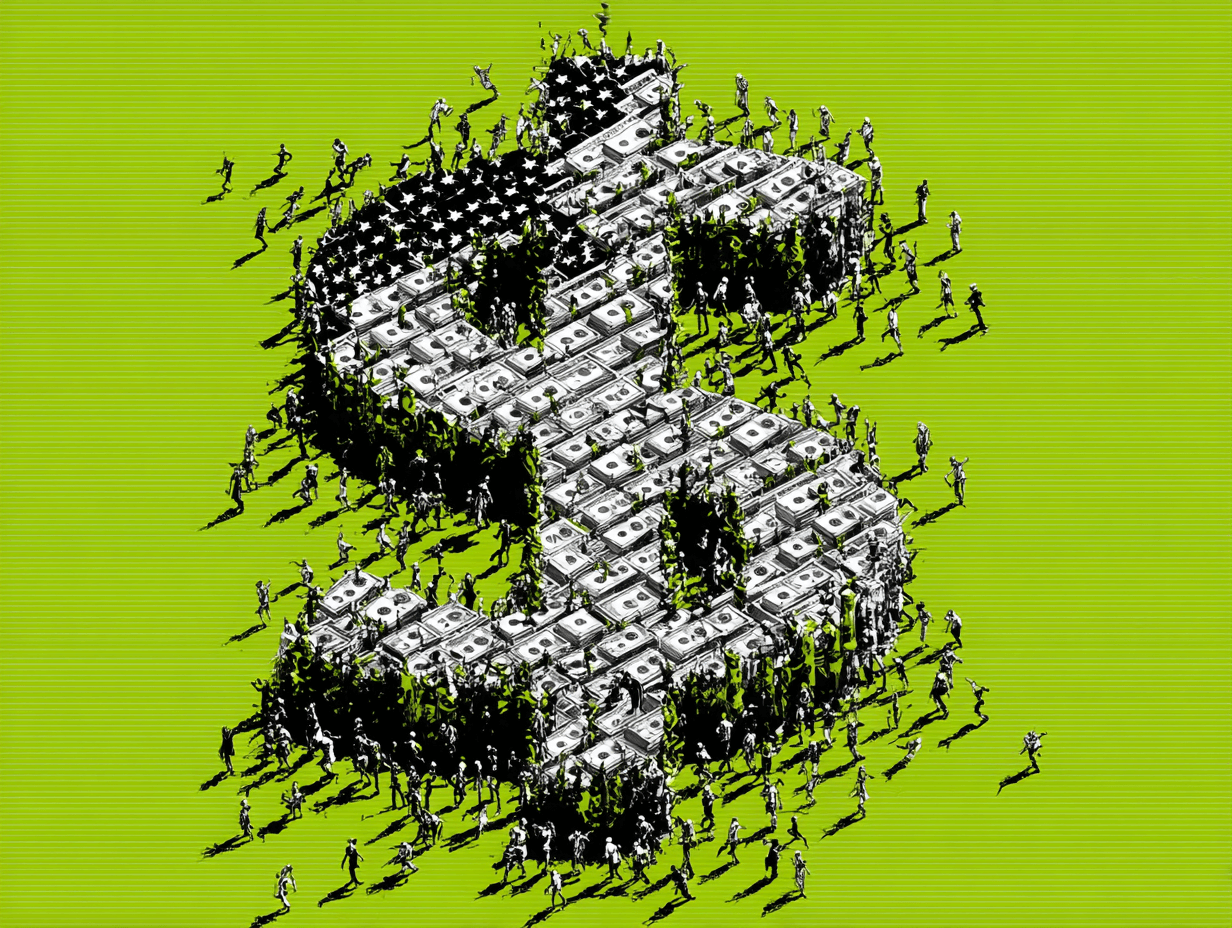
"America First" rolls off the tongue like apple pie and baseball. It sounds wholesome, protective, prioritizing. But if you're keeping score at home, the results don't match the marketing.
When angry crowds dragged Marie Antoinette out of Versailles in 1789, it wasn't because the monarchy suddenly stopped working. It was because people finally understood who the monarchy was actually working for, and it wasn't them.
Back then it was castles. Today, the moat isn't limited to natural resources or a strong military—it's data, algorithms, and trillion-dollar platforms. The moat around the castle isn't there to protect America from threats. It's there to protect the power that keeps the money flowing upward, and the people under control.
The Breadth of the Problem
We're first in medical bankruptcies, first in incarceration rates, first in student debt, globally. We're first in a lot of things just not the ones that actually help Americans live better lives. From foreclosing family farms to bankrupting people with the cost of medical bills, from Texas redistricting to sending young soldiers to die in oil wars, from fueling opioid addiction to turning social media into an IV drip of distraction—human capital has always been the story of America.
But today's system of extraction is exponentially more powerful with emerging technology, powered by AI, and encouraged by the human tendency to chase wealth over just about anything else. Understanding how that engine works is the key to everything else.
The Tech Protection Racket
The biggest beneficiaries of "America First" rhetoric aren't American families struggling with rent or healthcare. They're the same tech giants who've figured out how to monetize both the patriotism and the problems of the masses.
Every crisis creates cash flow.
When immigration becomes the boogeyman, who gets the billion-dollar border security contracts? Tech companies building surveillance systems and data analytics platforms. When "election integrity" becomes the rallying cry, who sells the solutions? The same tech companies that profit from the platforms spreading election misinformation in the first place.
Amazon Web Services hosts the infrastructure for ICE. Palantir makes millions analyzing immigration data. Others compete for Pentagon cloud contracts worth tens of billions. Facebook amplifies the divisive content that breaks trust in institutions, then sells the surveillance tools to monitor the resulting unrest.
The platforms that claim to connect us are the same ones that profit from dividing us. The algorithms that claim to show us what we want to see are keeping us scrolling, clicking, and buying within the echo chambers of our own thoughts.
The Data Moat
The real moat around the castle isn't military, it's informational.
These platforms know more about American citizens than the government does. They know what we buy, what we read, who we talk to, where we go, what makes us angry, what makes us afraid, what makes us spend money.
Data is the foundation of modern power, the lifeblood that sustains the machine of endless revenue generation.
If you can predict and influence human behavior at scale, you don't need to root your decision-making in integrity. You just need to shape the information environment that determines how people think and behave in their daily lives.
When Texas pushes through mid-decade redistricting, the software drawing those maps isn't neutral math. It's algorithms optimized for specific political outcomes, built by companies with their own interests baked into the code. It's beyond counting votes—it's manufacturing outcomes.
Even the anxiety-inducing headlines we're exposed to on an almost daily basis are story arcs of the bigger plot, and a cash cow for the healthcare industry that pushes pills to ease the tension.
Stressed, scared, divided people are easier to control and more profitable to exploit. Nothing's more ripe for manipulation than the jaded and downtrodden, the majority of whom are both financially lucrative to sell to, and incredibly easy to steamroll. There isn't a single emotion we feel that someone, somewhere, isn't monetizing for profit or exploiting for greater control.
The Recognition Point
Here's the number that should keep you up at night: $13.1 trillion. That's how much the five biggest tech companies are worth combined. More than the GDP of most countries.
If these companies are worth trillions, and they're all American companies, why does it feel like America is falling apart? How is the most powerful country in the world home to some of the least educated, least financially secure, least confident and hopeful in their ability to imagine a bright future? The wealth is being created by American workers and consumers, but it's being concentrated in the hands of people who've figured out how to game the system at scale.
"America First" has always meant people last. The day we all recognize that, no amount of security theater will protect the castle.
But recognition is just the first step.
So What Now?
We already have the numbers. We already have the power. The only thing we're missing is the recognition that we don't have to accept things as they are, in fact we never did. The movements of the past tell us so.
Here are five ways to reclaim agency in a system designed to make you feel powerless:
1. Start with your attention. The most valuable resource you have surprisingly isn't your spending power. It's your focus. Every click, scroll, and share is a vote for the kind of world you want to live in. Stop feeding the anxiety machine. Unfollow accounts that make you angry without making you smarter. Choose sources that inform rather than inflame, and try to spend more and more time engaging in activities that create a daily experience you enjoy partaking in.
2. Vote with your data. Use browsers that don't track you. Choose messaging apps that can't read your conversations. Pay for services instead of being the product. It's not about going off the grid, it's about making yourself and your community harder to profit off of.
3. Build local first. The platforms want you isolated and dependent on them for connection. Community organizing, local businesses, neighborhood networks—these create resilience that algorithms can't control. The antidote to digital overload and division is analog integration through local community.
4. Question the metrics. When someone says America is "winning," ask: winning what? For whom? By what measurement? GDP growth while wages stagnate isn't progress. Stock market highs while people ration insulin isn't prosperity. And waving a flag of "Greatness" while your people are amongst the poorest and least educated in the world is more a joke than a sense of pride. Efficiency that eliminates human dignity isn't innovation, and your soaring net worth while the masses plummet is a world set for less than prosperous future.
5. Own your narrative. The people who control the story control the future. Don't let others define what pride, prosperity or possibility means, what progress looks like, what success should be. America first should mean Americans first—all of us, of every color, of every class not just the shareholders.
The system they built depends on us staying divided, distracted, and convinced that we're powerless. But power isn't something we have to earn or be given. Power is something we take or relinquish every day through a thousand small choices.
Stop giving it away.
The moat around the castle isn't there to protect America from threats. It's there to protect the warden from the prisoners. You have to remember though, that we built that castle. Anything we build, can be rebuilt.
As always—stay curious, stay inspired.
Share this essay


